Perennials can make a valuable contribution to a healthy and climate‑resilient living environment. As part of urban green spaces, they support water retention, temperature regulation and the removal of air pollutants.
Improving air quality
Perennials form a dense layer of vegetation at ground level and have a relatively large leaf surface. Through their stomata, leaves absorb air pollutants such as nitrogen oxides (NOx), ozone (O₃) and carbon dioxide (CO₂). In addition, leaves can intercept particulate matter from the air. Leaf traits such as fine hairs, a rough surface texture and a thick wax layer enhance this capacity.
Reducing water nuisance
Perennials also help reduce water nuisance during peak rainfall events. Their leaves and stems intercept rainwater, allowing part of the water to be temporarily held on the plant before slowly draining into the soil. Their roots improve soil structure, increasing infiltration capacity so that more water can be stored in the soil instead of flowing directly into the sewer system.
Cooling effect
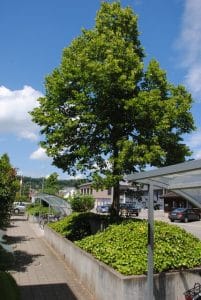
Evapotranspiration is the process by which water evaporates through leaves. This process extracts heat from the surrounding environment, which can locally reduce air temperature. Combined with the shade provided by trees and shrubs, perennials can help mitigate the urban heat‑island effect. This cooling effect is especially noticeable when vegetation has sufficient water available.
Suitable plant selection
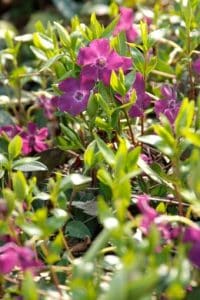
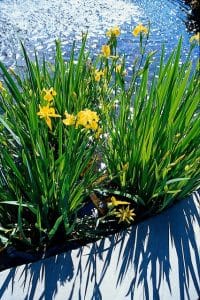
In particular, species that quickly form a closed vegetation layer with a large leaf surface are suitable. Examples include species from the genera Geranium, Alchemilla, Hedera, Vinca and Pachysandra. In moist areas or bioswales, species such as Mentha aquatica and Iris pseudacorus perform well.
Practical considerations
To maintain sufficient visibility for road users, a maximum vegetation height of approximately 50 cm is often used in locations where this is relevant.