Inspiration from the Frontlines of Green Design
In every field, there are visionaries who raise the bar, people with a keen eye for plants, an unconventional approach, and an endless passion for greenery. In this series, we spotlight the Perennial Pioneers: growers, designers, and green professionals who use perennials and ornamental grasses in their own original way.
What are their favorites? Why do they choose these plants, and how do they incorporate them into their designs? From surprising combinations to smart maintenance tips. Discover the inspiration and craftsmanship of these green trailblazers.
Perennial Pioneer Piet Oudolf
Say Oudolf, and you say perennials. Although he is also highly knowledgeable about trees and shrubs, it is especially his gardens filled with ornamental grasses and perennials that have earned him international acclaim.
 Oudolf is one of the most renowned garden designers in the world and enjoys global recognition for his innovative, naturalistic style. His impressive body of work includes iconic projects such as the High Line in New York, the Lurie Garden in Chicago, and Millennium Park. Closer to his home, he created remarkable gardens including the one at Museum Voorlinden in the Netherlands and his own garden in Hummelo. His work is characterized by a painterly composition in which color, texture, and structure come to life in every season.
Piet started his career as a gardener but couldn’t find the plant varieties he was looking for in the trade. This led him to start his own nursery, later moving to Hummelo, where he and his wife Anja established a nursery with specially selected plants and a design office. As his design work became more prominent, he eventually left implementation to others. His philosophy? Focus on plants that reflect the natural characteristics of the landscape and suit the local climate and soil. This vision has had a tremendous influence on how perennials are grown and used. He is regarded as a pioneer of the idea that a garden or planting should remain interesting all year round.
Even for Piet, choosing favorites is no easy task. The atmosphere of a place, the soil, and conditions often dictate what works. But fortunately, he was willing to share a selection with us.
In Piet Oudolf’s own words
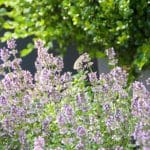
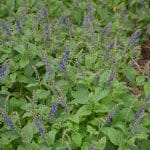
Betonica officinalis ‘Hummelo’
“Without hesitation, I start with Betonica (formerly Stachys) officinalis ‘Hummelo’. The name, of course, refers to my hometown. It was given by German nurseryman Ernst Pagels, who discovered it during a visit and saw the blooms buzzing with bumblebees (‘Hummel’ in German). It’s a strong, easy plant that flowers profusely and attracts many insects. It thrives in both sun and partial shade, stands tall in winter, and has a beautiful silhouette. In short: a multifunctional gem I still use often.”
Monarda bradburiana
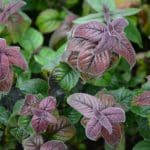
“I consider Monarda one of the most important genera among perennials. Everything about the plant is appealing. This species, native to the southeastern U.S., stands out because it’s virtually mildew-resistant. Its dark stems and purplish young leaves are striking accents, beautifully offset by the soft pink blooms. It grows to about 60 cm and does well in dry soils.”
Scutellaria incana
“Known in English as ‘skullcap’, this is a fine, reliable plant with a rare flower color. It blooms in the second half of the year, making it perfect for pairing with ornamental grasses. It forms clumps, has gray-green foliage, and is long-lived, all qualities I value. It also has an excellent winter profile: the spiked seed heads remain standing for a long time. It does well in partial shade. In the garden of Hauser & Wirth gallery, I’ve paired it with Sporobolus heterolepis.”
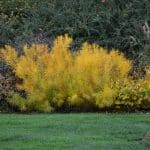
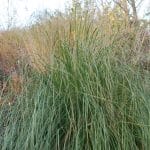
Amsonia hubrichtii
“Amsonia hubrichtii is one of my favorites, not for the flowers, but for its spectacular fall color. Its narrow, linear leaves turn a vivid yellow in autumn, creating a striking accent in the border. Patience is required, as it grows slowly, but once established, it’s there for life. Three plants cover about one square meter. Plant it near a mounding Geranium, which won’t interfere as Amsonia expands. In June, sky-blue flowers appear. The sturdy stems remain upright and provide structure, even when nearby plants need support.”
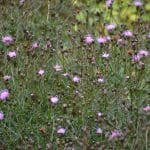
Serratula seoanei
“My planting schemes are always aimed at year-round interest with a focus on late summer. Serratula seoanei fits perfectly into that vision. This dainty plant, related to Aster, has dark green, finely dissected foliage that contrasts nicely with coarser-leaved species. It starts blooming in September with lilac-purple, thistle-like blooms that continue into November, lending a refined late-season effect. It grows to about 40 cm and forms a steady, non-aggressive clump in sun or partial shade.”
Sporobolus heterolepis
“Of course, I can’t leave grasses out of my favorites. Sporobolus is a North American grass that handles both drought and wet feet. On sunny days, its airy flower spikes emit a subtle coriander scent. In autumn, the foliage turns a warm rusty orange that pairs well with late bloomers like Rudbeckia. It requires patience early on, but after a few years it forms a stable clump. Ideal for bioswales or naturalistic borders. But beware, it doesn’t like severe winters.”
Sesleria autumnalis
“Actually, I find all Sesleria species useful, but I’ve chosen Sesleria autumnalis. It’s a versatile ornamental grass that can fill large areas and suppress unwanted weeds, while also serving as a calming focal point among other plants. Its gray-green spikes pair well with cool-toned perennials like Eryngium and Stachys byzantina. Being evergreen and tolerant of both sun and partial shade, I often use it in large borders that don’t receive full sun throughout the day. It brings unity across large areas.”
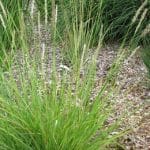
Eragrostis spectabilis
“The lovely English name ‘Lovegrass’ says it all. I like to use this finely branched grass in groups because of its reliability. It resembles the taller Panicum in flower form but is much shorter, making it ideal for the front of borders. It’s drought-tolerant. Some say it’s short-lived, but in well-drained, sunny spots, it holds its own. Its fine texture pairs beautifully with bold flowers like Echinacea purpurea and paradoxa, Rudbeckia fulgida, and Asclepias tuberosa.”
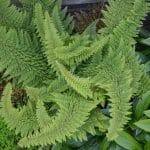
Polystichum setiferum ‘Herrenhausen’
“Though I love prairie planting, I obviously don’t only encounter sunny sites. For the monastery garden at Hauser & Wirth gallery in Somerset, for instance, I chose this soft shield fern. Evergreen, it provides year-round structure with its finely divided foliage. I prefer it as a specimen plant, where it really stands out. It thrives in almost any soil and grows to about 40 cm. In combination with shade-loving grasses like Luzula and Carex, the foliage shines. I also like pairing it with Kirengeshoma and shade-tolerant Geranium species.”
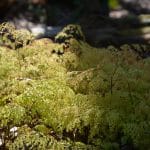
Adiantum pedatum
“Another favorite is Adiantum pedatum, the Northern Maidenhair Fern. While I often use Polystichum as a solitary plant, this one is ideal for mass planting. Ethereal in spring, it develops a delicate, lacy structure through summer. Dappled sunlight filtering through trees plays beautifully on its fresh green fronds. It spreads slowly but lasts for years once established. Its light foliage contrasts well with broader-leaved plants like Saruma henryi and again Kirengeshoma, both of which have yellow blooms.”
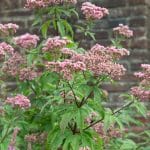
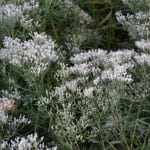
Eupatorium hyssopifolium
“Lastly, I want to share my appreciation for Eupatorium hyssopifolium, a unique and relatively unknown Joe-Pye weed species from North America. Unlike the common Eupatorium rugosum and maculatum, which prefer moist soil, this species thrives in dry conditions. Its narrow, linear leaves resemble Hyssopus, and the flat-topped flower clusters bloom from August into October. Just before flowering, the buds resemble tiny beads. Its winter silhouette is excellent, with sturdy stems holding their shape. Like its relatives, it’s popular with pollinators, a perennial that deserves more attention.”
Final Thoughts
“This list of favorites is far from complete. There are so many beautiful perennials and grasses to work with that it’s hard to choose. As I mentioned, each site calls for its own mood and its own selection. But all of the plants I’ve chosen here have proven their worth again and again.”

Want to know more? Check out our related articles below: