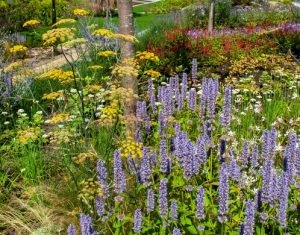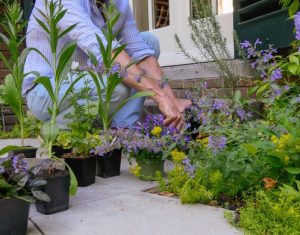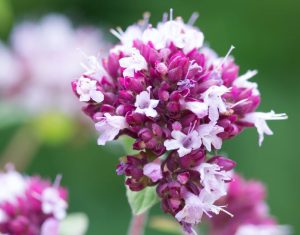
Perennials are essential additions to trees and shrubs in cemeteries. In line with the function of these spaces, it is important for the planting to suggest a sense of tranquility which will create the right atmosphere for visitors in need of consolation. In addition, perennials will last for years to come.
Basic principles cemeteries
The choice of plants for a cemetery involves three factors. First of all, the plants selected have to be very drought-resistant since the soil conditions can often be extreme. Secondly, such a planting should be made up of low-maintenance plants. And lastly, the effects of sun and shade have to be considered. Due to the presence of many large trees, a cemetery has locations offering various hours of sun a day.
Seasonal features
Making a well-considered choice of plants will ensure that the different colours, flowering periods and leaf shapes typical of perennials will provide an appropriate look throughout the year. Ornamental grasses such as Fountain Grass (Pennisetum), Sedge (Carex) or Alpine Oat Grass (Helictotrichon) create elegant winter silhouettes. The stems and seed pods produced by Mullein (Verbascum), Black-eyed Susan (Rudbeckia fulgida) and Sneezeweed (Helenium) provide a fascinating yet sober winter scene. Highlighted with the winter sun or covered with hoar frost makes their silhouettes simply delightful.
Symbolism
The increasing frequency of cremations means that memorial gardens are becoming more common in cemeteries as a framework for columbaria and scattering gardens. Something that these plantings have in common with those for graves is that they often convey symbolic meanings. Good examples would be white-flowering or evergreen plants. White stands for purity and hope, while evergreen plants such as Japanese Spurge (Pachysandra) and Periwinkle (Vinca) symbolise eternity. Why not include this symbolism in a planting plan?
Biodiversity
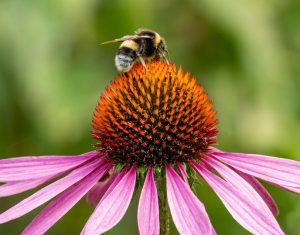
Cemeteries are green oases of tranquility that also serve as habitats for a wide range of animal species. By carefully distributing the flowering periods of plants in a planting, nectar can be available for months. Some cemeteries even focus entirely on the needs of butterflies when creating their planting plan.


Also interesting:
Perennials in public green spaces
Perennials for planting in dry soils and beneath tree canopies
Plants make us happy