
Transparent
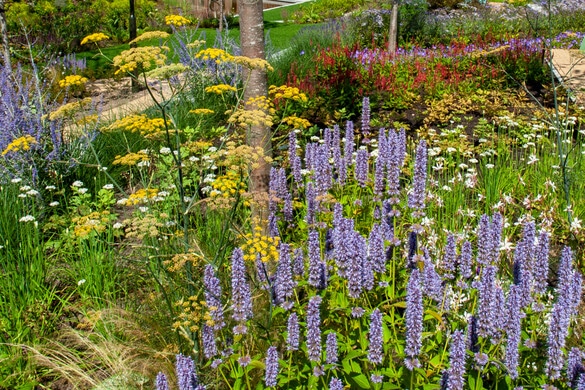
Each umbel, or flower head, consists of smaller umbels with many flowers filled with pollen and nectar. With their airy growth habit, umbelliferous perennials are transparent. They look stunning in groups, but will also intertwine effortlessly with plants with other flower forms such as panicles. Dill (Anethum), fennel (Foeniculum), Roman chervil (Myrrhis) and angelica (Angelica) are examples of umbelliferous plants. Yarrow (Achillea) is perhaps the best known umbellifer in the (ornamental) garden, but there are many other ones too.
A few examples:
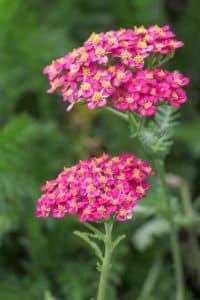
Yarrow – Achillea
Flowers: June-September in yellow, pink, purple, orange or red and white
Location: full sun
Tip: Tear (divide) this plant every couple of years in spring, and it will stay beautiful for years.
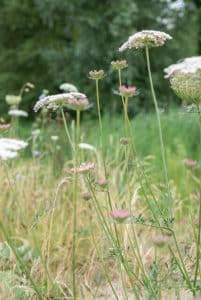
Cow parsley – Anthriscus sylvestris ‘Ravenswing’
Flowers: May-June, white
Location: partial shade/sun
The wild shape of this plant may well be the best known umbellifer.
Great pignut – Bunium bulbocastanum
Flowers: June-July, white
Location: partial shade/sun
All parts of this plant are edible; the taste of its tubers is not unlike that of sweet chestnuts.
Baltic parsley – Cenolophium denudatum
Flowers: June-September, white
Location: shade/partial shade/sun
Loved for its long flowering period and because it also thrives in the shade.
Wild carrot – Daucus carota
Flowers: June-October, white
Location: full sun
In the evening, the flower closes, only to unfold into an umbel again in the morning.
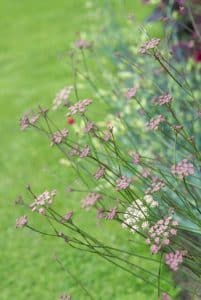
Golden lace – Patrinia scabiosifolia
Flowers: June-August, yellow
Location: partial shade/sun
The leaves of this umbellifer turn reddish in autumn.
Golden Alexander – Zizia aurea
Flowers: May-July, yellow
Location: partial shade/sun
Just like cow parsley, this plant flowers slightly earlier in the year.
Did you know that…
- Many umbelliferous plants are host plants for butterflies? Swallowtail butterflies, for example, lay their eggs on wild carrot.
- They are not all part of the family of umbellifers (Apiaceae or Umbelliferae)? Yarrow, for example, belongs to the composite family and golden lace to the valerian family.
- It is best to cut them back after winter? Insects take shelter among the leaves and stems in winter, and you can also enjoy their beautiful silhouette for months.