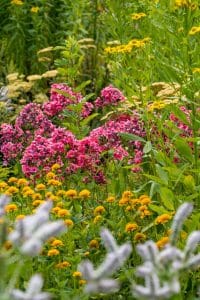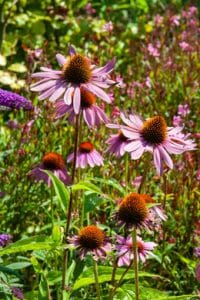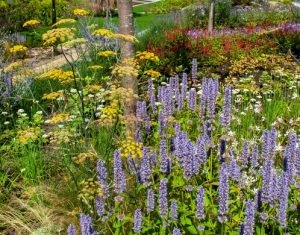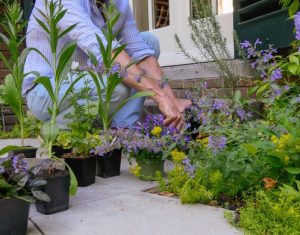
Green spaces in residential areas have a proven positive impact on both health and safety. A growing number of studies confirm this. The effects are strongest when the greenery is diverse and appealing. Perennials are the ideal foundation; they are versatile, resilient and thrive well in built-up environments.
Social cohesion
International studies show that neighbourhoods with more greenery are associated with reduced stress and fewer symptoms of depression. Green surroundings lower cortisol levels and encourage movement and social interaction. This strengthens social cohesion and increases social oversight in public spaces.
Attractive tree pits
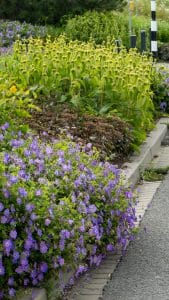
Neighbourhoods with more greenery report fewer incidents of aggressive behaviour. Even small interventions, such as well-planted tree pits, can increase neighbourhood satisfaction and strengthen the sense of safety. Suitable tree pit plants include hardy, drought- and shade-tolerant species such as Geranium, Epimedium and Bergenia.
Long-flowering perennials
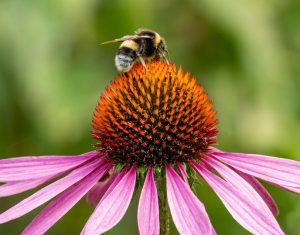
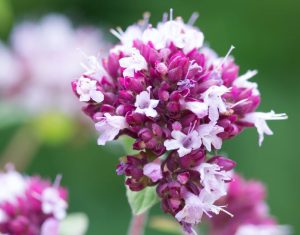
Colour enhances the positive perception of greenery. Long-flowering perennials that thrive in urban environments include Kalimeris, Nepeta and Rudbeckia. Expand the selection with strong, long-blooming varieties such as Persicaria amplexicaule, known for its abundant flowers and robust growth, and Hemerocallis, which is highly tolerant to road salt and dry conditions. Include species that add ornamental value outside the growing season, such as evergreen plants, ornamental grasses and Phlomis with decorative seed heads. Adding species that attract birds and insects supports biodiversity, which further strengthens the positive health impact.
Practical
Good maintenance is essential to ensure greenery looks well cared for year-round. Neglected planting and litter can evoke feelings of insecurity. On traffic islands and in sightlines, keep planting heights below 50 centimetres so road users maintain sufficient visibility.